
News and Updates
07.10.2025
NCICU Announces the 2025 Undergraduate Research Award Recipients
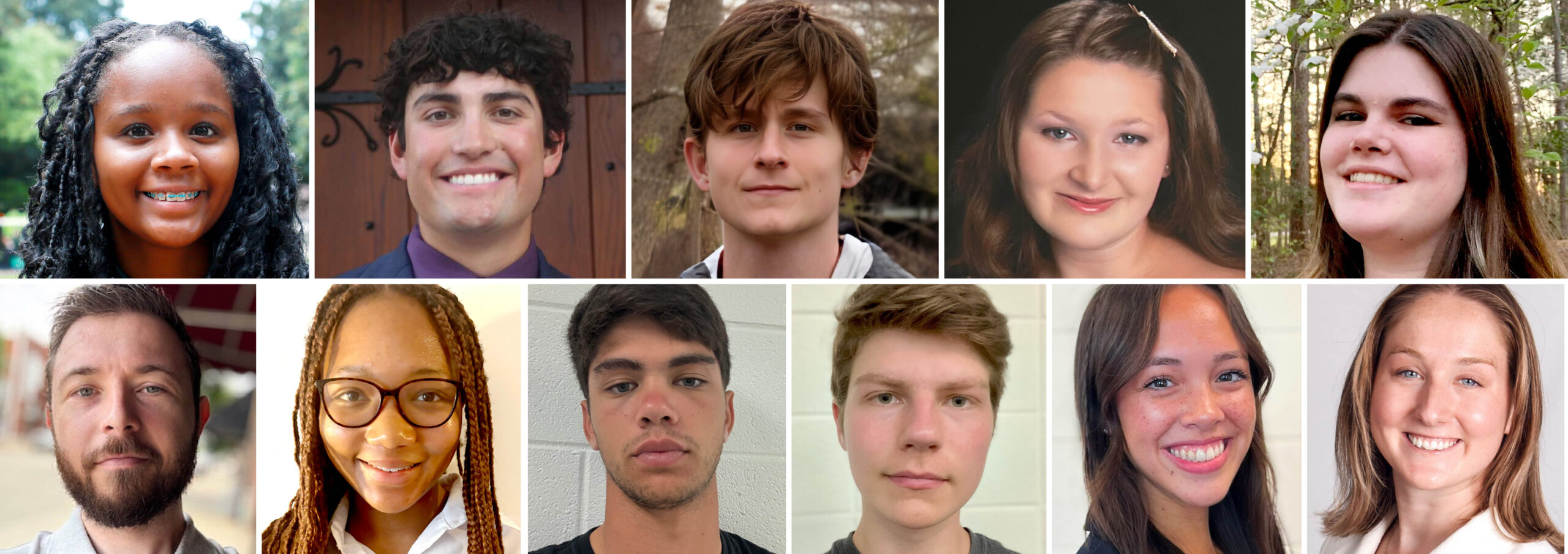
North Carolina Independent Colleges & Universities (NCICU) is proud to announce the 2025 recipients of the prestigious Undergraduate Research Award. This year, 11 outstanding students received stipends for their exemplary work in the fields of science, technology, engineering, and mathematics (STEM), as well as psychology.
The NCICU Undergraduate Research Award program supports students from NCICU’s 36 colleges and universities who are actively engaged in undergraduate research. The undergraduate research endowment, established by NCICU with generous contributions from the North Carolina GlaxoSmithKline Foundation and other corporate and foundation donors, provides stipends of varying amounts based on the types of projects undertaken by students.
These talented students, classified as juniors or seniors for the 2025-2026 academic year, have demonstrated exceptional research skills and a dedication to academic excellence. They will have the esteemed opportunity to present their projects at the annual State of North Carolina Undergraduate Research and Creativity Symposium (SNCURCS), a collaborative initiative between NCICU and the University of North Carolina, further highlighting the importance of their work.
The 2025 SNCURCS Symposium, scheduled for November 15, 2025, will be co-hosted by Elon University and Forsyth Tech Community College and will provide a platform for the award recipients to showcase their research findings and engage with scholars from across the state. More information about the symposium will be available to the participants during the upcoming summer and fall semesters.
The recipients of the 2025 NCICU Undergraduate Research Award are:

Tameka Adams
senior, psychology and criminal justice double major, Cary, NC
William Peace University
Tameka Adams’ research aims to investigate the impact of ethnicity on the perceptions of youth regarding law enforcement in the United States.
Jake Ankrum
senior, biochemistry, pre-med concentration & biology: health sciences concentration double major, Monument, CO
High Point University
Jake Ankrum’s primary objectives were to ascertain whether fluorescence in closed-form spirolactams originates from electron transfer between the xanthene core and the
lactam. It is speculated that this process is concentration-dependent, with aggregation of dimers decreasing the barriers for intramolecular charge transfer.

Henry Berta
junior, environmental science major, Seattle, WA
Warren Wilson College
Henry Berta’s goal for his project is to determine whether trees can uptake microplastics through their roots in response to the significant damage caused by the uprooting of thousands of trees across Warren Wilson College’s 600-acre forest in Swannanoa, NC.

Lily Cristini
junior, biochemistry major, pre-med concentration, Wake Forest, NC
High Point University
Lily Cristini’s research focuses on molecular biology, specifically examining the extreme environments in which Fungi exist, and exploring a type of cytoskeletal protein known as septins.
Kara Evans
junior, pharmaceutical sciences major, Mount Holly, NC
Campbell University
Kara Evans’ study aims to explore the contribution of GHSR1a signaling to the G protein and β-arrestin pathways in the release of pro- and anti-inflammatory cytokines from leukocytes, utilizing control (WT) and β-arrestin2-deficient (KO) mice.

Joseph Kidwell
junior, biochemistry major, Mechanicsville, MD
Campbell University
Joseph Kidwell’s study aims to consider mutations to the serine-threonine kinase TAOK1 that have been associated with autism spectrum disorder (ASD) and neurodevelopmental delay (NDD). Currently, there are nearly 30 specific mutations that link TAOK1 to these diseases. Of them, only four have been explored with the intention of better understanding the morphological and functional consequences of the mutations.

Lyniah Lee
senior, biology major, Winfield, IL
Chowan University
Lyniah Lee’s research aims to elucidate the mechanisms underlying the amyloidogenesis of human amylin by investigating the effects of various proline mutations on its amyloidogenic properties, utilizing a range of computational programs designed to predict amyloidogenicity.

Justin Peterson
junior, biology major, pre-dental concentration, Edenton, NC
Chowan University
The purpose of Justin Peterson’s research is to conduct computational alanine scanning on human Transthyretin (TTR) to identify crucial residues that ensure tetramer stability and assess the mutational effects on stability associated with TTR amyloidogenesis.

Jasper Schmoock
junior, environmental science major, Carrboro, NC
Warren Wilson College
Jasper Schmoock’s research aims to assess the significant barrier that deer herbivory presents to the regeneration of ecologically and economically valuable hardwoods, such as oaks, through a study on the impact of deer overbrowsing on the forest understory in a northern hardwood forest in northwestern North Carolina.

Shauna Skow
senior, biology major, pre-dental track, Forest, VA
High Point University
Shauna Skow’s research focuses on the genetic basis of morphological plasticity in Knufia (K.) petricola by targeting two key genes, SKN7 and ATG1, using CRISPR-based gene knockout techniques.

Jillian Zermeno
junior, psychology major, Opp, AL
Campbell University
The purpose of Jillian Zermeno’s research is to examine the acceptability and effectiveness of wellbeing toolkits when integrated into a first-year student lifetime wellness course.
Click here for more information about the Undergraduate Research Symposium.
The post NCICU Announces the 2025 Undergraduate Research Award Recipients appeared first on NCICU.
Newsletter Signup
The Independent College Fund of NC (ICFNC) newsletter connects donors and stakeholders with the impact of their contributions across 36 member colleges and universities. It highlights student achievements, scholarship milestones, grant-funded programs like the Ethics Bowl, and strategic growth that drives North Carolina’s future workforce.
Quick Links
The Independent College Fund of North Carolina (ICFNC) is the dedicated fundraising division of North Carolina Independent Colleges and Universities (NCICU). Both entities operate as 501(c)(3) public charities, meaning all charitable contributions to support scholarships and academic programs are tax-deductible.